Translate

Showing posts with label Southwest culture. Show all posts

Wednesday, May 31, 2017

Southwestern Cultural Mix Has A New Player

Street side door of Salt + Honey Bakery Cafe
Happening upon a new restaurant in my home town of El Paso, Texas is one of my secret joys, bad for the waistline but great for the spirit.  My husband, Wayne, and I discovered Salt + Honey Bakery Cafe soon after returning from a trip to Ireland, when our fun meter was still going strong.

Salt + Honey Bakery Cafe is located in a restored building in what is known as the Five Points area of El Paso.  The location is in an older neighborhood which has recently begun to undergo gentrification. I have great memories of the area, which used to have one of the few department stores in town, a Sears store, and a movie theater, the Pershing, which always brings pleasant memories of childhood.  Now an upscale coffee shop and several new restaurants can be found, among them our new discovery.

As we walked into the bustling Salt + Honey Bakery Cafe, my first impression was of a well-stocked bakery case, multiple seating areas, and light colored wood. Part of the original black and white small tile floor was still in evidence in the main cafe, and a hardwood floor had been added in another area.


First impression of cafe


Ah, Toto, we were not in El Paso anymore.  I could almost imagine I was in Los Angeles near the Grove/Farmers Market area, where my son, Clayton, and his girlfriend, Melissa, live. My hipness quotient went up considerably just by being a customer at the Salt and Honey.

One quality I like about El Paso is our mixture of people of different nationalities, social groups, and languages.  I wouldn't say we have reached cosmopolitan status, but we are a border city and a bit of a melting pot. The seating in the cafe reflected the concept that all are welcome.  A counter was available for customers who want a quick cup of coffee and one of the scrumptious-looking homemade pastries.  


Counter customers

The counter seating  reminded Wayne of the old-fashioned drugstores of his youth.  We vowed to return some morning soon.

Techies are welcome.

For those of us tied to our electronic devices (and who isn't these days?) stations are available with plenty of light and plug-ins to commune with your favorite electronic friend or even human one.  

Customers wanting a softer seat and a living room atmosphere can sit on a sofa in one area of the cafe, while traditionalists can sit at regular tables.  Seating by the front window would have been perfect for me to look out on the street and watch passers-by. 

But how about the food, you may be wondering.  I found many items on the menu to try, surprising for the picky eater that I am.  The Salt + Honey offers choices for all-day breakfast, brunch and lunch. Breakfast choices include Vanilla Chia Pudding, Baklava Pancakes, and The Londoner. Some of the brunch items are Hummus Avocado Toast (my choice), East Coast Bagel, and La Huevona.  La Huevona is a egg dish (huevos are eggs in Spanish), but the joke is that huevona is a slang word for "lazy" in the El Paso area.  Lunch items include The Black Friday, Summer Burrata, and, of course, a hamburger (not your father's hamburger, to be sure). More information about the cafe is available here.

The Salt + Honey is a place where different cultures and influences come together— 
Middle Eastern, international, traditional, and modern.  I'm ready to return already!


Friday, January 20, 2017

Beating the January blahs - Southwest style


It's that inevitable moment in early January when I realize the holidays are truly over. Grey skies mirror my mood, with no bright holiday decorations to dispel the gloom.  I take out a 2017 calendar and contemplate the blank spaces waiting to be filled in with life's new happenings.

Each year I order a calendar from the Association for the Prevention of Cruelty to Animals (ASPCA). I look forward to pictures of rescued cats and dogs and their heartwarming stories.  My own special pet, my cat Bitsy, is curled up beside the computer keyboard, wishing I would rub her head instead of type on the keyboard.


So what does a Southwesterner do to beat the winter blahs?  What can I write in those empty blocks on the January calendar?  Fortunately, because I live on the Texas-Mexico border in El Paso, I have an opportunity to extend the holiday season until after January 6th by celebrating Día de los Reyes Magos,Three Kings Day.  This year my husband, Wayne, and I splurged on a large rosca de reyes, a special cake offered by local bakeries for this occasion. Our cake was especially delicious because it was filled with cajeta, a thick caramel syrup.  We took half of the cake to a friend's house and devoured the rest over several days.

Rosca de Reyes
Bakers hide a small plastic Baby Jesus (or sometimes more than one) in the cake.  Whoever finds the figure is supposed to host a tamale party on February 2, Candlemas Day. I wish someone would host a Candelmas party and invite me, because by February I will probably to be desperate for entertainment.

Three and a half long weeks in January loom ahead.  Here are some things I may do to keep up my spirits:

*collaborate with Wayne to finish a mystery book we are writing - Forts, Farbs, and Phantoms;
*publish Seasons and Seasonings of the Southwest on Kindle;
*pay special attention to my 73 houseplants;
*catch up on language study on Duolingo;
*plan a May trip to Ireland to participate in a steam train tour;
*take classes at the local Osher Lifelong Learning Center;
*lose a few pounds added during the holidays and train vacation to Canada.

OR... I could curl up in front of the fireplace with a thick book and occasionally gaze out the window at the bare landscape.  My 2017 calendar is as bare as that landscape, ready for whatever the future may bring.


Friday, January 23, 2015

Our Multicultural Southwest

On reading the title of this blog post, you may think I am going to talk about Hispanic culture in the Southwest.  And you are partially right.  

When my husband Wayne and I went out for breakfast earlier this week, we had an array of Mexican food restaurants to choose from in El Paso, Texas, my home town. Would it be the luscious red sauce on the huevos rancheros  at the L & J Restaurant, the homemade tortillas at Carnitas Querétaro, or the cinnamon coffee at Tacos Chinampa?  All of these favorite haunts offer a lively atmosphere, pleasant background music in Spanish, and attentive waiters.  But we chose a restaurant that we hadn't been to recently - Ándale Restaurant.  And it had it all.

The colorful dining area was decorated with piñatas.


There were lots of tiles and lots of colors on the walls.


 And a touch of whimsy made me smile.


But later on this week, we are going to experience another culture that you may not immediately associate with the Southwest - the Scottish culture.  We are driving five hours to Albuquerque, New Mexico to attend a Robert Burns' Celebration sponsored by the St. Andrew's Society of that state. St. Andrews Scottish Society of New Mexico

Robert Burns, the celebrated Scots poet, is remembered every year on his birthday, January 25, by Scots and Scots descendants around the world. 

Robert Burns


In the United States alone, 2009 census gives the number of Scottish or "Scotch-Irish" descendants as nine million.  Wayne will be particularly pleased to learn that one of his heroes from the Western movie screen has "Scotch-Irish" ancestors.


John Wayne


Wayne and I may not be bona fide Scots descendants, but our hearts have been in Scotland since we started visiting that country several years ago.  This celebration will be our first formal experience of a Burns' night.  

Wayne is getting his kilt ready (Yes, he bought a kilt in Scotland).  I'm looking forward to the entertainment, which I hope includes bagpipes (Yes, I am a fan of bagpipe music). I'm hoping that someone will be speaking English with that beautiful Scots lilt. And we are wondering how the traditional dishes of Scotland, salmon, haggis, neeps, tatties, and clapshot will be interpreted by the Sheraton Hotel!

I'll be taking lots of notes and pictures of Burns'  night for next week's blog. 

Until then,  Haste Ye Back (Farewell).

Thursday, March 6, 2014

A Quiet Night in the Bunkhouse

What a panicky feeling!  Our Internet and land line service went down yesterday morning.  My husband Wayne and I entertained ourselves fairly well during the day, but as night rolled around, we truly wanted to click on those electronic devices – laptops, desktop computer,  iPad, even a voice on the telephone – anything to connect with the outside world.

But we are adults.  Surely we could have a nice evening by ourselves. We ended up spending several enjoyable hours in an outside room on our property that we have dubbed “The Bunkhouse.”


Armed with a Kindle Reader and various books and magazines, we settled in for the evening.  Wayne built a fire in the old wood burning stove and put George Strait on the CD player.


Rocking in an old cane chair that had belonged to my grandfather, I realized I had forgotten how much I loved the Bunkhouse. 


The concept for this 150 square foot room came from a picture in a Southwest decorating book of a very fancy tool shed.  By the time Wayne was through enhancing the plans, it was a modern recreation of an old-fashioned bunkhouse.


There was a place to eat or play games,


chat or listen to music,


 or even take an afternoon siesta.

.


And of course, being a bunkhouse, it had to be decorated in Southwest style.  A plaque at the doorway, "Mi casa es Su Casa" (My house is your house) welcomes visitors.


A ceiling made of vigas and cedar latillas and a metal cow's skull above the stove complete the look.


The evening spent in the bunkhouse took me back to an earlier time.  It was one of the most relaxing times that I have had in a while.  Now what time is that Time-Warner repairman arriving? I'm ready to jump back into the modern world.  


Friday, August 30, 2013

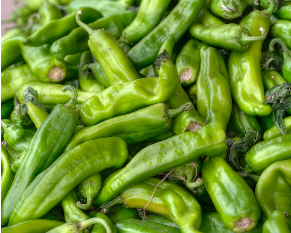
The Green Chile Harvest- Can You Smell Those Chiles Roasting?

http://www.flickr.com/photos/bbum/2834468157/tion


Oh, if I could only include aromas in this blog with the ease that images and sound can be posted. In the technology of the future, I would post a picture taken outdoors by a large chile roaster and let you share in an aroma that is unique to the Southwest. 


My husband and I have had many adventures with the fall chile harvest each year, from picking our own chiles and roasting them on a grill in the backyard, to buying chiles that were so over roasted that no green chile was left (just blackened skins), to sharing the excitement of chile harvest with friends.

This is what happend one chile season.

It’s usually around mid-August when my husband Wayne starts asking me how many packages of green chiles we have left in the freezer.  “It’s almost chile season,” he observes ominously.  “We’d better be sure to get a good supply this year.”

One of the joys of living in El Paso, Texas is celebrating the chile harvest of our neighboring state of New Mexico.  During the waning days of summer, chile pods ripen to a bright green until they are ready to be picked and sold at roadside stands.  Many El Pasoans pride themselves on buying large quantities of green chiles to store in the freezer.  A quick defrosting and peeling of the chiles produces the basis for unforgettable dishes and sauces.  Fresh salsa, chiles rellenos, green chile cornbread, chiles fríos, chile con queso, and even green chile cranberry sauce come to mind.

For several years, our family ritual was to drive the 60 miles to Las Cruces, New Mexico on a warm autumn day and buy a 50 pound bag of green chiles at a roadside stand.  For a few extra dollars, the vendor would roast the chiles on the spot using a round metal cage mounted on a propane burner. 

propane chile roaster


With the chiles stowed in cardboard boxes in the trunk of the car, we would drive to the nearest convenience store to buy a package of flour tortillas.  The next step in the ritual would be to stop under a shady cottonwood tree on the side of the road.  We would pull over quickly, anticipating our first taste of the season’s green chiles. The procedure never varied.  Standing by the trunk of the car, we peeled the blackened skin off of a chile, wrapped the chile in a tortilla, rolling it up expertly by tucking in the ends as we rolled, and took a large bite, oohing and aahing over the flavor.

One year we invited our friends David and his wife Linda, who were raised on the Eastern Seaboard of the United States, to join our chile harvest celebration.  “Do you just eat the chiles straight on the tortilla?  Aren’t they too hot?” they questioned cautiously.  “Naah.  You’ll love them,” Wayne replied confidently. 

The first part of the trip went as planned.  Drive to New Mexico, find a chile vendor, buy a large bag of chiles, have them roasted, buy  tortillas, and drive to a shady spot.  The aroma of chiles tantalized us on the short drive down a leafy back road.  We hopped out of the car and ran around to the trunk.  Wayne was the host, directing the ceremony and postponing his first bit of chile until everyone else had theirs.

David, Linda and I were happily munching on our tortilla and chile when we saw Wayne’s face change color as he took a big bite.  He started hopping around and gasping for breath.  “That’s the hottest chile I ever put in my mouth,” he managed to croak.  Wayne mopped his head and forehead, wet with perspiration, searching for something to put out the fire in his mouth.  We had water and cokes in a cooler, but as veteran chile lovers know, those liquids only spread the hot sensation throughout the lips and mouth.  “I’m dying,” Wayne moaned. 

We didn’t have any milk or butter, but bread is supposed to dampen the hotness, so we urged Wayne to eat several tortillas.  As with many bad experiences in life, the only real solution was letting time do its healing.  By the time we arrived home in El Paso an hour later, Wayne was back to normal, if a little shaken that his beloved green chiles had betrayed him.

What a great feeling to have a freezer shelf full of chiles.  I can make fresh salsa by chopping green chiles and adding chopped onions, garlic, tomatoes, cilantro, and salt and pepper.  If I want a hot dish, I combine the above ingredients (minus the cilantro) and cook them at a low heat on the stove in a large cast iron skillet.  The cooked chiles can be spread over grilled chicken or beef.  But, not being a carnivore, my favorite dish is to add a little white cheese to the cooked chile mixture along with a dash of evaporated milk to give the dish a soupy texture.  This chile con queso is great with tostadas or warmed tortillas. 

Another dish I like to make when I have a little extra time is chiles fríos.  I stuff the chiles with guacamole and chill them in the refrigerator.  I imagine that they could also be stuffed with other ingredients as well.  At Thanksgiving, I add some chopped green chiles to homemade cranberry sauce.  The hotness of the chiles and sweetness of the sauce make a great taste experience. 

I love chiles rellenos, but since we aren’t using the frying technique much in our house these days, I haven’t made them in a while.  Before we decided that we had better get healthy, I would make a modified chile relleno by stuffing a chile with cheese, wrapping it in a won ton wrapper, and frying it in oil.  Green chiles and cheese added to a corn bread recipe make a complete meal in one.  And, although I don’t cook them myself, I used to love buying green chile bagels in Las Cruces on my way home from teaching classes there.  Somehow I always start out with half a dozen bagels and make it to El Paso about an hour later with only four left in the bag.

They say that the sense of smell is one of the most evocative of human experiences.  The aroma of roasting green chiles in autumn, even more than the actual taste, takes my mind to warm, sunshiny days, crisp mornings and nights, and outdoor festivals with food booths and music.  I also feel a little sad that we are enjoying the bountiful harvest now, but in a few short months our world will turn cold again as the cycle of life continues.

Bountiful harvest of green chiles


Friday, August 16, 2013

"El Brinco" - The Jump


Daily life in late summer has started to drag a bit around our household.  We seem to be searching for something unique to distinguish one week from the next.  I'm remembering a summer several years ago when we did have a unique experience.  We  witnessed "El Brinco" which translates to "The Jump."

“El Brinco” would happen very soon, the Mexican announcer assured the crowd gathered around the temporary stage set up on the Mexican side of the river.  My husband Wayne and I had awakened early on a Saturday morning to drive to West El Paso near the old Asarco plant to witness a daring motorcycle jump across the Rio Grande.  The river is not very wide at that point, only about 65 feet across, but it marks the boundary between two sovereign nations, the United States of America and the United States of Mexico. 


Publicity for the event had been by word of mouth, one friend passing along information to another.  The motorcycle rider was celebrating his 50th birthday with an Evil Knievel-type demonstration, jumping from one country into another.  A friend of Wayne’s had constructed the jumping ramp, so we had a special invitation and felt part of the in crowd.

Large numbers of cars and trucks were hurrying down the dirt road to the jump site.  It was hot, dusty and overgrown with weeds.  Climbing an embankment to get a better view, we were astonished to see a large crowd, numbering in the thousands, on the Mexican side of the river.  The crowd was being entertained with live and recorded rap music.  Ciudad Juárez, El Paso’s sister city across the border, has had a series of problems in recent years with increased violence caused by warring drug cartels.  This event was being celebrated on the Mexican side to rally citizens to bring peace back to the city.  Soldiers armed with AK47 attack rifles were in evidence as well as mounted policemen who patrolled the crowd.  We could also spot armed men stationed at strategic lookout points on the large mountain behind the river.  

On the American side of the river, the smaller crowd was more subdued.  Although there were the usual Border Patrol vehicles along the river on the route to the site, the only noticeable official presence at the jump was an ambulance which kept getting stuck in the sand and two young firemen in uniform.    It appeared that friends of the motorcyclist were going to be in charge of clearing a path for his run to the ramp.

Rumors were flying as the crowd waited. 
 “The media are asking him to make several false starts, so he won’t jump the first couple of times.”  
“He’s going to have to go back to the International Bridge to go through customs to return to the U.S.”  
“He was going to do the jump without government permission and try to return to the U.S. before getting  caught, but we talked him out of that plan.” 
 “The red tape to make this jump happen was incredible.” 
 “He’s keeping it at full throttle in third gear all the way, and he’ll hit the ramp at about 45 mph.”  
 We stretched our necks in anticipation.

Finally we heard the roar of a motorcycle engine.  A yellow-suited motorcyclist climbed the ramp and stopped at water's edge.  The crowds on both sides of the river cheered.  Tension rose as the rider repeated this two more times.  On the fourth run to the ramp, it happened.  He flew through the air and easily landed in the soft sand on the other side of the river.  The Mexican fans swarmed to give him a hero’s welcome.  Each time he tried to exit the area, he was deluged by fans wanted pictures and autographs.  Finally, the stage announcer had to call for crowd control by the mounted policemen.

After the motorcyclist had finally made his escape (to where, I wondered?), the two crowds, Mexican and American, stood observing each other curiously across the river.  A mere 65 feet is close enough to see many details.   Two Tarahumara Indian women in traditional costumes were carrying babies in slings across their backs.  A little Mexican child wanted a stick to play with in the water.  His father found a weed growing nearby and stripped off the leaves to make a wand.  Two young men in baggy pants were smiling and gesturing at the American crowd.  “Look, they’re inviting us over.”  “No, those are gang signs,” someone else observed.  

And then we all stood transfixed as a dog of unknown nationality swam unconcernedly down the middle of the river, looking neither left to the American side nor right to the Mexican side.  In contrast, how complicated we humans make our lives.


Friday, August 9, 2013

A Passion for Purple

Let me state right upfront that anything that grows in my Southwest garden is appreciated.  I have even been know to let weeds flourish in the springtime just to see a little green emerging into a gray world.

Have you noticed that many native Southwestern plants offer yellow and red blossoms to the world? Red is striking, yellow is cheerful, but my current passion is plants with purplish blooms.  I want to share with you some of the purple plants that are currently decorating the garden (cross my fingers - one never knows in the Southwest desert what a plant will decide to do from one day to the next).

Because we have had rain and higher humidity than usual in our area, the purple sages have been putting on a riotous show all over El Paso. The rest of the year, the sages just hang around, gray-green, and forgettable until just the right barometric moment.  Then they burst into blooms of many shades, from dark purple to lilac.


Purple Sage

Purple sage also goes by the name of Texas sage. This sage grows forgotten in a cactus garden in our backyard, and we basically ignore it most of the year.  I can't even baby it with frequent waterings, which would actually lead to its demise.  One online plant expert from Arizona recommended giving the plants a little extra water to encourage blooming, but with my tendency to overwater everything, I am afraid to indulge in any risky behaviors. 

I can't imagine a more spectacular plant when it finally does bloom.  I always promise myself to buy and plant more sages (there are many different varieties), but once the excitement of the blooming period ends, I forget how beautiful sages can be and become seduced by the colorful, cheaper annuals displayed by nurseries.  Local native plant experts bemoan the fact that local gardeners can't resist the urge to prune sages into unnatural shapes, like large balls or lollipops, because they do not bloom as well (and look fake).

Ruellia in pot


Ruellia blossoms up close
My son discovered ruellias (commonly known as Mexican petunias) when he was living in Austin, Texas. They grew so well in the Austin climate that he called his plant "the little tree." My ruellias aren't nearly as lush, but they produce fascinating blossoms that last only a short time, much like a bougainvillea blossom. And ruellias are perennials, although they freeze to the soil line in our zone and emerge after the last frost date.  I must admit  this is ruellia number two.  The first one I inherited from my son didn't make the transition from Austin to El Paso.

Santa Rita cactus on left

My husband introduced me to the Santa Rita cactus that has purple pads.  It is a colorful change from the usual green pads on most cacti.  The other poor cactus on the right looks terminal.  I think I tend to water cacti in pots too much and have probably killed it.

Ice plant

Ice plant is classified as a ground cover, but my ice plant lives in the back of a frog pot.  It requires very little care. Recently, I saw a handwritten sign next to the ice plants at a nursery that said "Don't water!"  A good warning to me as well as the nursery staff, I thought.  I love the Spanish name for ice plant, dedo, which means "finger".  This plant is one of the smallest varieties.  I believe that the smaller plant is called dedo del niño (child's finder) and the large variety is called dedo del rey  (king's finger), but this information is anecdotal.  The large ice plant can be very invasive, so I stick to the small fingered plant and contain it in a pot.  I generally am not bothered by a plant labeled as "invasive", because that means it has a good chance of surviving in my garden.

Thai or Asian Basil

I fell for this curly basil when I was shopping for vegetable plants one day, and I'm glad that I did.  It produces long purple spikes that not only have a wonderful aroma but are also much more colorful than my regular green basil.  Thai restaurants are often named "Thai Basil".  It must be an important ingredient in Thai cuisine, which I am not into (yet).

All of these purple beauties are relatively easy to grow (or I wouldn't find them flourishing in my garden).

I bought several new purple plants  last weekend but haven't planted them yet.  If they survive until next week, I'll blog about them.  Do you have a favorite purple plant that survives (dare I say grows abundantly?) in the Southwest?